
Why Terrazzo Is One of the Most Sustainable Surface Finishes in Interior Design & Architecture in 2026
Sustainability is no longer a footnote in architecture and interior design, it is a primary specification criterion. With industry frameworks like the RICS Whole Life Carbon Assessment Standard (2nd edition, 2024) and the UK Net Zero Carbon Buildings Standard (1st edition, 2026) setting requirements for assessing embodied and operational carbon across a building's full lifecycle, material choices carry more weight than ever.
So, if you are asking yourself why is terrazzo sustainable, or whether terrazzo for interior design and architecture projects can really support your sustainability goals, here are six reasons why terrazzo remains one of the most responsible surface finishes available to architects and interior designers in 2026.
1. Recycled material content
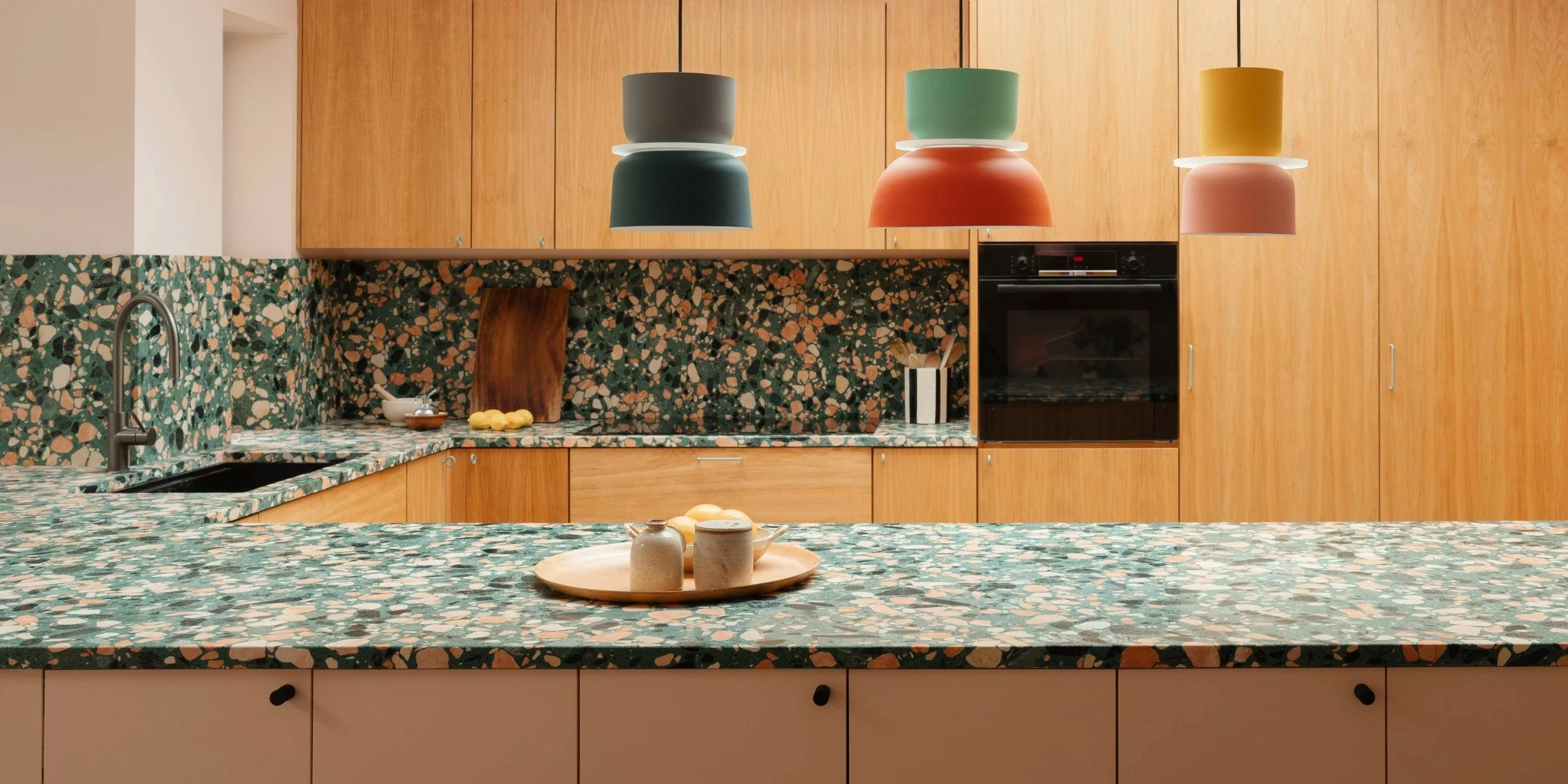
Terrazzo is and has always been, a product born from waste. It was one of the first recycled flooring systems in existence. It originated 15th-century Venice, where workers used set discarded marble offcuts into flooring rather than letting them go to waste. That founding principle holds true today.
Terrazzo transforms the remains of architectural debris into stunning new surfaces for architecture and design. Sources of recycled aggregate include post-consumer glass and mirror chips, reclaimed marble and other natural stone chips from construction waste, and even plastic debris, making it a leader when it comes to waste management and minimisation.
For interior designers and architects specifying sustainable surface finishes, terrazzo's recycled material content is not simply a marketing claim - it is measurable, documented, and recognised under many green building rating systems.
2.Zero Volatile Organic Compounds (VOC) and Improved Indoor Air Quality
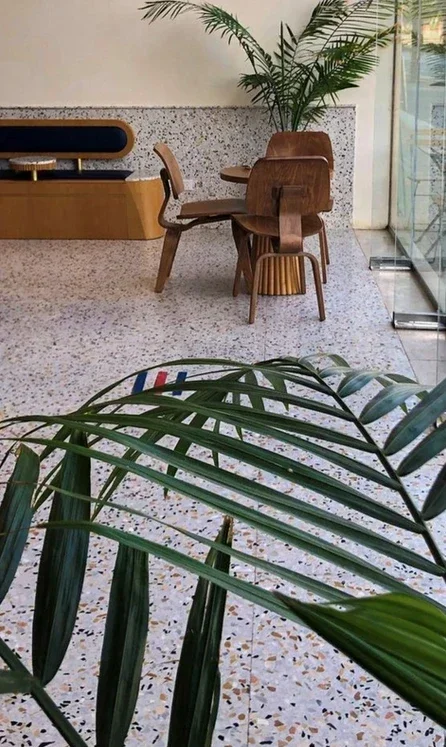
Awareness of Volatile Organic Compounds (VOCs) and the impact these can have on indoor air quality (and the atmosphere more generally) has risen up the agenda for both design professionals and building occupants in recent years. VOCs are harmful gases emitted from certain paints, adhesives, and surface finishes which over time build up leading to potential health impacts on building occupants, as well as contributing to atmospheric pollution.
Both cement- and resin-based terrazzo are comprised of zero or minimal VOC materials, which exhibit little or no emissions over their lifetime, making them an excellent choice for occupants and the planet.
For luxury residential, high-end commercial, and hospitality projects, where experience is everything, this is a meaningful specification advantage and one that’s increasingly expected by discerning clients.
3. Exceptional Thermal Performance and
Energy Efficiency
An often-overlooked sustainability argument for terrazzo is its contribution to a building's operational energy performance.
Terrazzo is a high-density material with significant thermal mass. It absorbs, stores and slowly releases heat which helps in the passive regulation of interior temperatures whilst reducing dependence on mechanical heating and cooling systems. Terrazzo keeps spaces cooler in summer and warmer in winter, contributing to improved energy efficiency across the building's operational lifespan.
In a design landscape where operational carbon is under increasing scrutiny, this passive performance characteristic is a genuine and quantifiable environmental benefit.
4. Longevity and Low Maintenance
Sustainability is not only about what a material is made of, but also about how long it lasts and what it requires to maintain. On both counts, terrazzo is a strong performer.
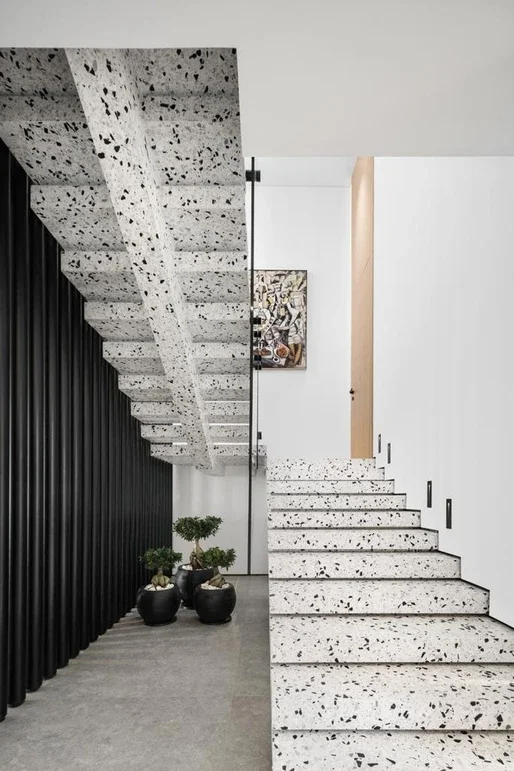
Both cementitious and resin-based terrazzos have a high compressive strength making it an extremely hard-wearing material. If looked after correctly it will last for many decades, often lasting as long as the building it is housed in.
Importantly, if damaged, Terrazzo can be repaired and refurbished in situ. Rather than a strip-and-replace cycle, terrazzo can be ground back, refinished, and restored to its original appearance. This reduces the embodied carbon associated with replacement materials, waste disposal, and the energy cost of reinstallation, making it a sustainable, practical and cost-effective choice in the long-term.
5. Circular Economy Credentials: Recyclable at End of Life
This is a dimension of terrazzo's sustainable character that has recently come sharply into focus and represents a key argument for specifying it in 2026. As well as incorporating recycled materials, terrazzo itself is recyclable at the end of its life, making it a circular material.
With the construction industry in 2026 generating around 32% of all waste that is sent to landfill in the UK, a surface finish that actively diverts material from landfill, both at the point of manufacture and at the end of its life, is one of the most genuinely sustainable specification choices available.
6. Timeless Aesthetics: The Most Sustainable Design Decision Is One You Never Have to Reverse
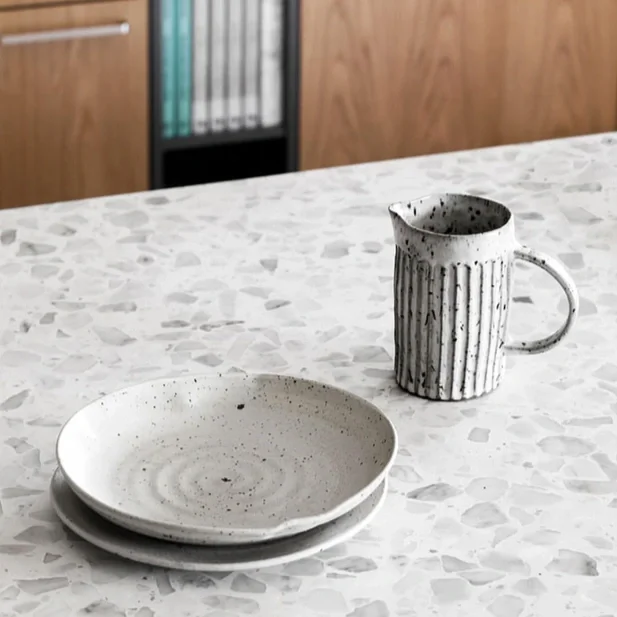
There is a sustainability argument that rarely appears in technical specifications but is still significant: a material that is timelessly stylish never needs to be replaced for aesthetic reasons. Terrazzo is one of those materials.
Whilst trends in interior design come and go with furnishings, layouts, colour palettes, and styles ever evolving, terrazzo endures as an elegant and characterful backdrop. A terrazzo floor or worktop installed today will look as considered and intentional in thirty years as it does on the day of installation.
Terrazzo for Interior Design in 2026: A Material That Does It All
Few surface finishes can claim to be simultaneously beautiful, durable, low-impact in manufacture, and circular in their lifecycle. Terrazzo can. It is a material that rewards long-term thinking; the kind of thinking that defines the best architecture and interior design.
Whether you are specifying floors, walls, or bespoke surface details for a luxury residence, a flagship commercial space, or a high-end hospitality project, terrazzo belongs at the top of your list.
We carry an extensive terrazzo range and would love to help you find the right option for your project.